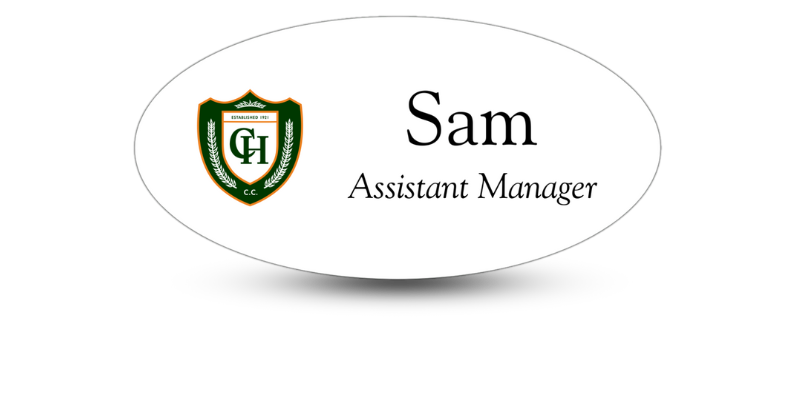
Best Fonts and Colors for Branded Employee Name Badges
How font and color choices improve readability, brand recognition, and customer trust

Do Fonts and Colors Matter on Name Badges?
Employee name badges are small, but they do a lot of work. They identify staff, support brand recognition, and influence how customers perceive your business. Fonts and colors play a major role in whether a name badge looks professional or poorly designed.
When fonts are hard to read or colors clash, customers struggle to read names, and that creates friction in even the simplest interactions. Clear design choices help your brand feel confident, consistent, and approachable.
How do I Choose Fonts That Are Easy to Read?
Readability should always come first. Customers often view name badges from several feet away, under different lighting conditions.
Fonts that work best for name badges typically share these traits:
- Clean lines
- Even spacing
- No decorative elements
Sans-serif fonts are often the safest choice. They remain legible at smaller sizes and don’t lose clarity whether they are printed on plastic or metal.
Avoid overly thin fonts or script-style lettering. While they may look nice in digital branding, they often become difficult to read on a physical badge.
Balancing Brand Fonts with Practical Design
Many businesses want their name badges to match the fonts used in their logo or marketing materials. That’s a good goal, but practicality still matters.
A common solution is:
- Use your brand font for company names or titles
- Use a simple, readable font for employee names
This keeps your branding consistent without sacrificing clarity.
Color Contrast: The Key to Visibility
The most important color rule for name badges is contrast. If customers can’t quickly distinguish the text from the background, the badge isn’t doing its job.
High-contrast combinations include:
- Dark text on a light background
- Light text on a dark background
Low-contrast combinations such as gray text on silver or light blue on white—may look subtle but are often difficult to read in real-world settings.
Using Brand Colors the Right Way
Brand colors are important, but they need to be used thoughtfully on name badges. Bright or bold brand colors can work well as accents rather than full backgrounds.
Effective ways to use brand colors include:
- Logo placement
- Accent bars or borders
- Job titles or icons
This approach keeps the badge visually connected to your brand without overwhelming the main information.
Avoiding Color Overload
Trying to include too many colors on a name tag can make it feel cluttered. Most professional badge designs work best with:
- One main background color
- One text color
- One accent color
Limiting your color palette helps maintain clarity and keeps the focus on the employee’s name.
Considering Different Lighting Environments
Employee name badges are worn in a variety of settings, from bright retail floors to dim restaurants, outdoor events to hotel lobbies. Colors that look good on a screen don’t always perform well in real life.
Before finalizing a design, consider:
- Glare from overhead lighting
- Dark uniforms that may blend with dark badges
- Outdoor sunlight washing out light colors
Testing badge designs in real working conditions helps prevent readability issues.
Consistency Across Teams and Locations
Using the same fonts and color schemes across all employee name badges reinforces brand recognition. This is especially important for franchises and multi-location businesses.
Consistent badge design:
- Makes teams easy to identify
- Supports a unified brand image
- Helps customers recognize your business instantly
Even small variations in font or color can make branding feel inconsistent.
Durability and Color Longevity
Colors should remain clear and readable over time. Low-quality printing or finishes can fade, chip, or discolor, making badges look worn.
Choosing quality materials and finishes helps:
- Maintain color accuracy
- Reduce frequent replacements
- Keep badges looking professional
Durability supports both branding and long-term cost control.
Final Thoughts
The best fonts and colors for branded employee name badges are the ones that balance clarity with brand identity. Readable fonts, strong contrast, and thoughtful use of brand colors help badges look professional and function properly.
When fonts and colors work together, name badges become a seamless part of your customer experience: supporting trust, recognition, and consistency at every interaction. Contact Name Tag Pros today and let us create the perfect name badge that aligns with your brand!
Share Article
Categories
View Recent Blog Posts