Standardizing Job Titles and Departments on Employee Name Tags
Why Standardizing Job Titles on Name Badges Matters
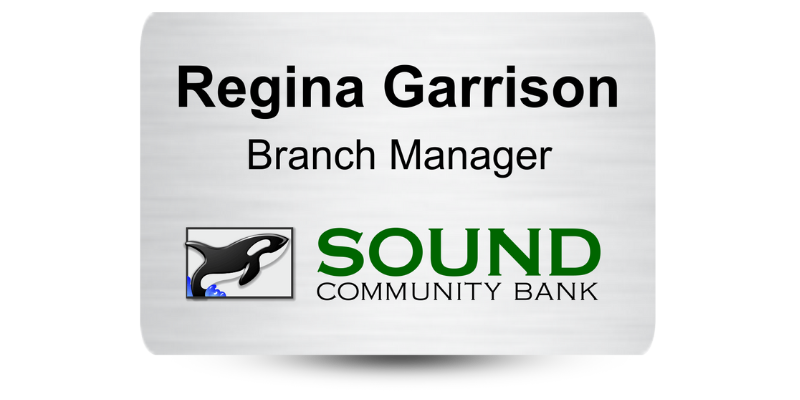
When you choose to put job titles on your employee name tags, it helps people understand roles quickly, without needing further instructions, guesswork, or extra questions. Using consistent titles and departments across the workplace helps staff, visitors, and partners identify who to approach for their needs.
Inconsistent naming creates more friction and wastes people’s time. For example, it can be confusing if name badges across an organization designate titles on name badges as People Ops, Human Resources, and HR. They all mean the same thing, of course. But people can be confused about staff roles without clear designations.
Standardization matters even more if your workplace is a high-traffic or fast-paced environment like hospitals, schools, large conferences, warehouses, or a multi-site organization. Clear role recognition supports smoother coordination. Clearly identifying staff roles helps new hires and rotating teams navigate the organization faster, as the badge helps them navigate roles and departments.
Consistent job titles on name tags are less about formality. It’s more about speed and helping the right person get the right question at the right time. It means:
· Fewer interruptions: Less “Which team are you with?” or “What do you do?” questions.
· Cleaner handoffs: Requests and issues get to the right group faster.
· Less rework: Fewer one-off badge edits because a standard covers most cases.
· Better onboarding: New employees learn common titles and department labels quickly.
· More reliable: Badges are consistent across buildings, shifts, and print runs.
Set a Simple Naming System: What Belongs in Title vs. Department
Start with making one decision that prevents tons of downstream problems. Define what you want in the title field. This lays a foundation for readable name tags.
A practical rule is that the title describes the role, or what the person is. Department describes where they work, such as the unit or organizational home. For example, “Registered Nurse” is a role, and “Emergency Department” is a unit. When these are mixed, name tags become inconsistent and harder to maintain, especially if people transfer, temporarily cover another area, or rotate.
Check out these tips:
· Title: Role name that remains the same across moves. (Registered Nurse, IT Support Specialist, Security Officer)
· Department: Official organizational unit label. (Emergency, Facilities, Human Resources)
· Avoid Mixing: Don’t encode a unit to a role when it’s okay for it to live in Department. In other words, avoid “Emergency RN if Registered Nurse + Emergency if it is allowed and readable.
Designate a Consistent Vocabulary for Department Labels
The easiest way to avoid badge-to-badge inconsistencies is to build a controlled vocabulary. Make a master list of approved department labels for administrators to choose from. This prevents inconsistencies like “HR” and “Human Resource.. It also makes sure punctuation and pluralization changes are consistent and official. Even if your employees understand the differences, inconsistency causes hesitation, which can make a huge difference in a large organization.
Tips for Building Consistent Departments and Titles on Name Tags
· Assign one department to develop and manage job titles and department designations on official name tags.
· Use one label per department. For example use either HR or Human Resources consistently, but not both.
· Decide on punctuation and casing and apply it everywhere.
· Review the list quarterly or annually so necessary changes can be made in a timely and organized manner.
· If you have multiple locations, include location rules. Designations may stay the same, unless one site has a unique department.
Abbreviations: Short List of Rules for Long Titles
Long titles are one of the primary reasons organizations are forced to redesign name tag layouts. The fix isn’t constantly changing your name badge size or design. Determining a set of standard abbreviations can help with name badge design and protect readability.
Abbreviations should only be used if they are widely understood in your organization. If you choose to use them, create a standardized list. This may be included with your approved department labels and job titles. If “IT” is recognized universally, it’s safe to use it. If an acronym is only familiar in a sub-team, it’s not going to help outside of the department.
Here are some tips to help you create a workable list of abbreviations.
· Abbreviate Consistently: Choose one approved shortened form and use it consistently everywhere.
· Shorten Less Important Words First: Drop level markers or qualifiers before cutting core role identifiers.
· Avoid Ambiguous abbreviations: If two roles could share the same abbreviation, don’t use it.
· Prefer Clarity Over Cleverness: Slightly longer titles that are readable are better than a shorter one that no one understands.
· Decide on Credentials: If you use credentials on your name tags, standardize the format. Use RN always, not R.N.
Name Tag Pros: Name Badges with Job Title & Departments
Once you have your standardized list of job titles and departments, give Name Tag Pros a call! We’ll be happy to help you design a readable, effective name badge that aligns with your brand and works for your workplace.
Share Article
Categories
View Recent Blog Posts